

Building Defects and Combustible Cladding: What Apartment Owners Can Actually Claim
By the AgentFind Editorial Team — Australian Property Professional Directory, Sydney

The most expensive mistake an apartment owner makes with a building defect is assuming the clock starts when they noticed it. In New South Wales the statutory warranty period under the Home Building Act 1989 runs from the date of the occupation certificate — six years for major defects, two years for everything else. Buy a four-year-old apartment and you have inherited two years of major-defect warranty, not six. The clock does not reset on settlement, and it does not pause while an owners corporation debates what to do.
Key Takeaways
Statutory warranties are short, they start at completion rather than at purchase, and they differ by state. Where they have expired, New South Wales owners may still have an avenue under the Design and Building Practitioners Act 2020, and buildings with combustible cladding sit on a separate track again — one where the government support schemes have been closing rather than expanding.
- NSW: six years for major defects, two years for non-major, running from the occupation certificate for a strata scheme, with a further six months if the defect appears in the final six months of the period.
- A “major defect” is a defined term, not a description of how bad it looks. It turns on structural integrity, habitability and safety — load-bearing elements, fire safety systems, waterproofing.
- NSW’s Project Remediate has closed to new registrations. It offered eligible Class 2 buildings a ten-year interest-free loan for high-risk cladding replacement, and targeted roughly 225 buildings.
- Victoria has legislated to wind up Cladding Safety Victoria. The Cladding Safety Victoria Repeal Act received royal assent on 19 May 2026, after the body assisted more than 1,600 Class 2 buildings. Check what scheme actually exists when you need it.
What Counts as a Major Defect
Under the Home Building Act 1989 a major defect is one in a major element of the building that causes, or is likely to cause, the building to be uninhabitable, or the destruction or threatened collapse of the building or part of it — or a failure of a fire safety system or a waterproofing failure. Load-bearing components, fire safety systems and waterproofing are the categories that matter.
This distinction is the whole ballgame, because the non-major warranty is only two years and has almost always expired by the time a second owner arrives. Cracked render, a failing intercom or poorly hung doors are non-major. Water ingress through a failed membrane, a fire-rated wall built without its fire rating, or a structural slab that is deflecting are not.
| State | Indicative warranty or claim window | Who to confirm it with |
|---|---|---|
| NSW | 6 years major defects, 2 years non-major, from the occupation certificate | Building Commission NSW |
| VIC | A 10-year limitation period from the issue of the occupancy permit applies to building actions under the Building Act 1993 | Victorian Building Authority / Planning Victoria |
| QLD | Complaint windows under the QBCC scheme are materially shorter for non-structural than structural work | Queensland Building and Construction Commission |
| WA, SA, TAS, ACT, NT | Separate statutory schemes with their own periods and thresholds | The state or territory building regulator |
Treat that table as a prompt to check, not as the answer. These periods are set by statute, they have been amended repeatedly across every jurisdiction, and the date that starts the clock is itself often disputed.
Insider Insight: Before you do anything else, find the occupation certificate date and write it on the front of the file. Every deadline in a defect claim counts backwards from that date, and owners corporations routinely discover they have eleven weeks left rather than three years. Your strata manager or the council record will have it. If you are still deciding whether to buy, ask for it before you bid — it tells you how much warranty you are actually purchasing.
When the Warranties Have Already Expired
In New South Wales, the Design and Building Practitioners Act 2020 created a statutory duty of care owed by people who carry out construction work to owners of the land — including subsequent owners — to exercise reasonable care to avoid economic loss caused by defects. It has become the principal avenue where Home Building Act warranties have run out.
Two cautions, both significant. First, the limitation periods that apply to a duty-of-care claim under that Act are technical and have been argued in the courts; do not assume you know how long you have. Second, a duty-of-care claim is litigation, not a complaint form — it needs expert evidence, it costs money, and an owners corporation needs a resolution to fund it.
That is not a reason to give up. It is a reason to get advice early, while the building’s own records, the original certifier’s file and the contractor’s corporate existence are all still available. Defect claims are lost to time and to deregistered builders far more often than they are lost on the merits.
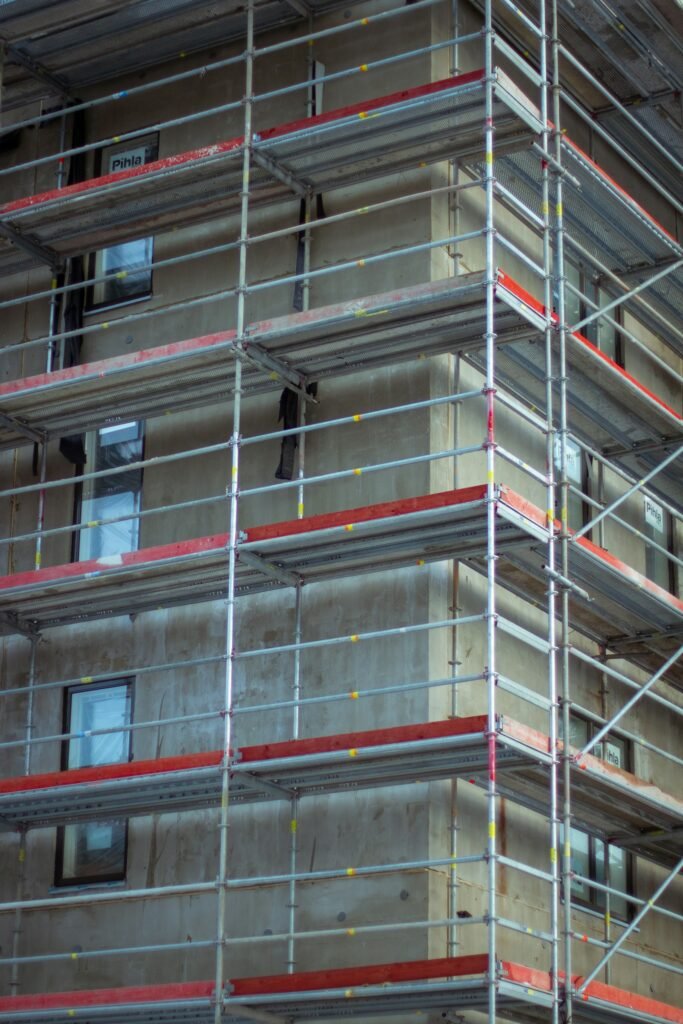
Cladding Is a Separate Track — and the Schemes Are Closing
Combustible cladding has been handled through dedicated government programs rather than the ordinary defect system, and those programs are contracting. In NSW, Project Remediate offered eligible Class 2 residential apartment buildings a ten-year interest-free loan plus quality assurance and program management for high-risk cladding façades — and registrations for it have now closed. In Victoria, Cladding Safety Victoria assisted more than 1,600 Class 2 buildings before Parliament passed legislation to wind the body up, with royal assent on 19 May 2026.
For an owner or a buyer, the practical consequence is that “there’s a government program for that” is no longer safe to assume. What existed in 2021 is not what exists now, and what exists now may not exist when your building’s turn arrives. If cladding is a live issue for a scheme you own in or are buying into, the questions are whether the building has been assessed, whether it is on the relevant state taskforce’s register, whether it is already inside a funded program, and what the remediation estimate and funding path look like if it is not.
None of those answers come from an agent’s brochure. They come from the owners corporation’s records, the state building regulator and, where a program is involved, the program administrator.
FEATURED CASE STUDY
The Owners Corporation That Found Out in Year Five
A forty-eight-lot Sydney scheme began reporting water ingress into three ground-floor apartments in the fifth year after completion. The committee spent eight months seeking quotes, arguing over whether the cause was the planter boxes or the podium membrane, and asking the original builder to attend.
The occupation certificate had been issued five years and four months earlier. The major-defect warranty had roughly eight months left when the first complaint was made — and about two weeks left when the committee finally obtained an expert report.
The scheme lodged in time, narrowly. Had the committee commissioned the report at the first complaint rather than at the fourth meeting, it would have had eight months of negotiating room instead of a fortnight — and materially better leverage.
The lesson is procedural, not technical. In a defect matter the expert report is the first step, not the last, because it is the document that fixes what you are claiming while you still have time to claim it. This is an illustrative scenario built from the typical figures above, not a specific client file.
What to Do, In Order
Establish the occupation certificate date, get an independent expert report, put the builder and developer on written notice, then take advice on which avenue applies before the period expires. Doing these out of order is how claims are lost.
Practically: ask the strata manager for the occupation certificate, the defects correspondence and any prior reports. Engage a building consultant or engineer — not the contractor who will quote for the repair — to document cause and extent. Notify the builder and developer in writing, dated, with the report attached. Then get legal advice on whether you are inside the statutory warranty period, whether a duty-of-care claim is available, and whether any insurance or government scheme applies.
Owners corporations should also remember that in NSW the period for claiming damage to common property was extended from two years to six years under the 2025 strata reforms, and that schemes cannot delay repairs that affect an owner’s access to or use of their lot. Deferring a repair to avoid a levy is no longer a neutral choice.
Frequently Asked Questions
➕ How long do I have to claim a building defect in NSW?
➕ Does the warranty period restart when I buy the apartment?
➕ What is a major defect?
➕ Can I still claim if the statutory warranty has expired?
➕ Is Project Remediate still accepting buildings?
➕ What happened to Cladding Safety Victoria?
➕ Who pays to fix a defect in common property?
➕ Should I get a report before or after contacting the builder?
Check the Reviews Before You Pick Up the Phone
Defect matters are won and lost on how early someone competent gets involved. Every professional listed on AgentFind shows their verified Google rating and review count on their profile, pulled from their own Google Business Profile rather than written for them.
across rated listings
the listed professionals
4.5 stars or higher
listed nationally
Ratings and review counts are sourced from each firm’s public Google Business Profile and refreshed periodically; 341 of 433 listings currently carry a Google rating. AgentFind does not write, edit or solicit these reviews.
Been through a defect claim? Tell us in the comments how long it took from first report to first repair, and what you would do differently. Committees currently arguing about whether to commission a report will learn more from that than from any guide.
About AgentFind
AgentFind is an Australian directory of property professionals — selling agents, buyer’s agents, mortgage brokers, conveyancers and strata managers — searchable by location and speciality. Listings are not exclusive by area, so more than one professional can appear in the same suburb and you see the full field rather than a single paid name. Enquiries go directly to the professional you contact, and AgentFind takes no commission on any resulting sale.
Find Out What You’re Buying Into
A conveyancer can pull the occupation certificate date and the defects correspondence before you exchange. A strata manager can tell you whether your scheme’s records will stand up in a claim.
Search Conveyancers
Save Your Favourite Professionals
Open any professional’s profile and choose Bookmark to add them to your shortlist — you’ll be asked to sign in first, then your saved professionals appear on your Bookmarks page.
Related reading: special levies and capital works funds and the hidden costs of selling property in Australia.
Important — currency and verification notice
This article is general information only and was current at the date of publication shown above. It is not legal, financial, taxation or strata advice, and it does not take your circumstances into account.
Legislation, regulations, penalties, thresholds, scheme rules and tribunal procedures change frequently, and several of the provisions referred to here commenced or change on staged dates. Before acting on anything in this article you must independently verify the current position that applies to your property and your state or territory — including the relevant strata, property, building and consumer legislation; the jurisdiction, procedures and time limits of the applicable tribunal (for example NCAT in New South Wales or VCAT in Victoria); the content and currency of any certificate you intend to rely on, such as a section 184 or section 108 certificate; and the current status of any building defect, combustible cladding or remediation scheme affecting the building.
AgentFind is a directory service. We do not provide legal, financial or strata advice and we accept no responsibility for decisions made in reliance on this article. Obtain advice from a qualified professional — a solicitor, licensed conveyancer, accountant, licensed mortgage broker or licensed strata manager as appropriate — and confirm current requirements with the relevant government authority or regulator before committing to a transaction or a course of action.
Sources: Home Building Act 1989 (NSW); Building Commission NSW — building defect complaints; NSW Government — Project Remediate; Cladding Safety Victoria Repeal Bill 2026 (Vic); Victorian Government — cladding safety; NSW Government — guide to strata law changes.